
Ala Kul Lake, Kyrgyzstan
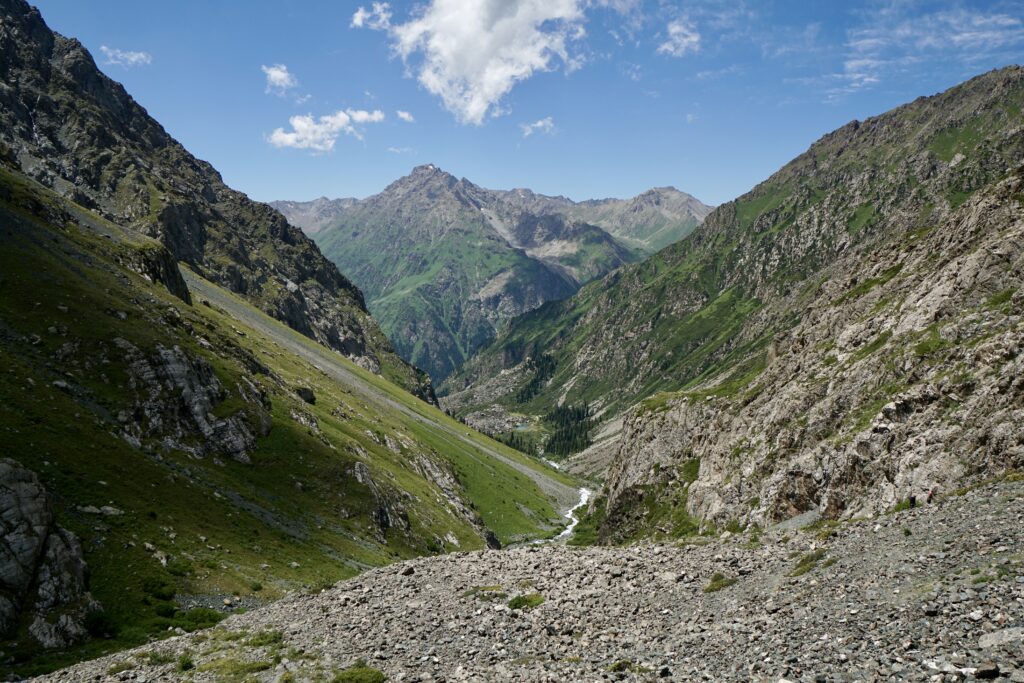
We had heard the stories before we ever saw a photo. A lake the colour of something that should not exist in nature, milky blue. It was hidden high in the Terskey Ala Too at the eastern edge of Issyk Kul. A mountain range nobody back home would be able to place on a map. That was enough for my dad and me. In 2018 we went to find it.
Quick Facts
- Where: Ala Kul Lake, Terskey Ala Too range, near Karakol, eastern Kyrgyzstan
- Lake altitude: around 3,500m (the pass on the full route reaches about 3,900m)
- Standard trek: roughly 55km point to point over 3 to 4 days
- Our version: driven partway up the valley, then a long single day to the lake and back, around 40km and close to 2,000m of ascent
- Season: early July to mid September for the most reliable conditions
- Permit: no special trek or border permit, just a small nature reserve entry fee at the gate
Three Days, or One Long One
The problem was time. The way the guides and the internet recommend it, the Ala Kul trek is a three day traverse. The owner of our hotel said it was impossible to do the trek in less than three days.
The original trek makes you go in through the Karakol valley, camp the first night at Sirota below the pass. On the second day you pass the lake and the ala kul pass. At the highest altitude of the trek, you drop down the loose gravel on the far side. After that treacherous traverse, you finish at the Altyn Arashan hot springs. The third day is a small walk to the road. We didn’t have the days or the interest in camping. My dad and I are hikers, not campers. The magical view of the lake was our goal and we wanted to sleep in a real bed in Karakol.
What we needed was a shortcut, and what we got was Sergei.
Up the River with an Ex KGB Agent
Sergei was our guide, the past days in Charyn Canyon and Peak Lenin. However, Sergei had a past, ex KGB, he told us. Sergei didn’t whince or said much when he said he was ex KGB, our curiosity rose. He looked at our plan, the one everyone says is impossible in a day. We were told to leave the next day at 7am. His idea was simple. Drive up the river as far as the machine would go, then walk the rest.
He had a Nissan Patrol, it was a solid 4×4, but I wondered what challenges laid ahead.
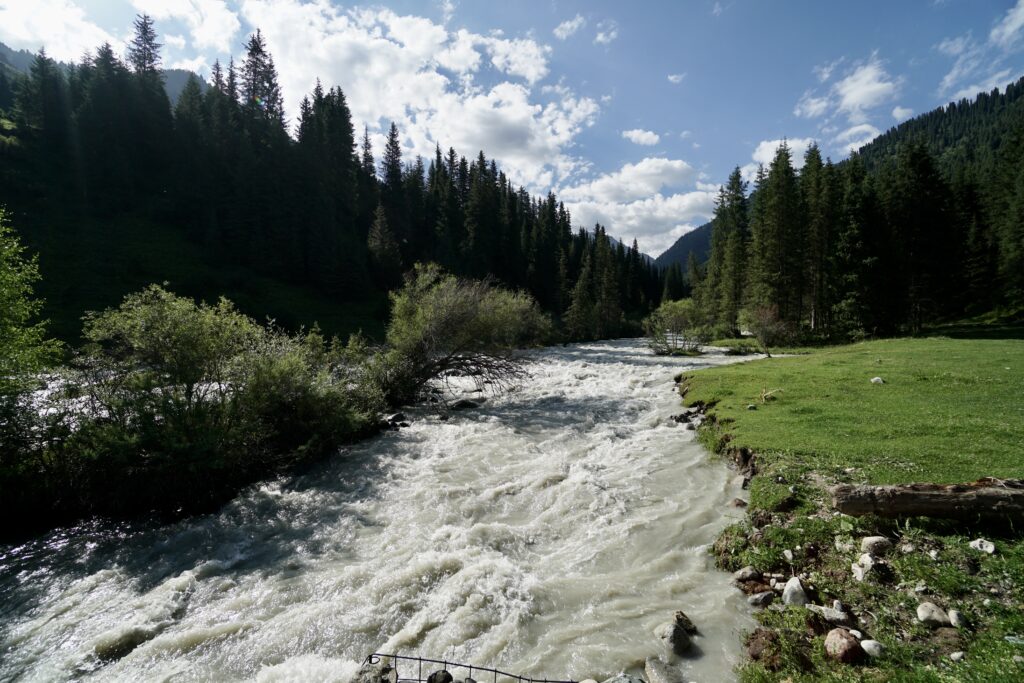
I was sceptical whether it would work. I took over his sound system, we listened to melodic house, which made the journey all the more atmospheric. The track up the Karakol valley turns into riverbed, and the riverbed turns into something that is mostly water and rock and the suggestion of a road. Sergei drove it like he had a grudge against the river. Every time I was sure we were stuck, the wheels found something, and we lurched another few hundred metres higher. Music blended into progress and progress into succession. It should not have worked. It worked.
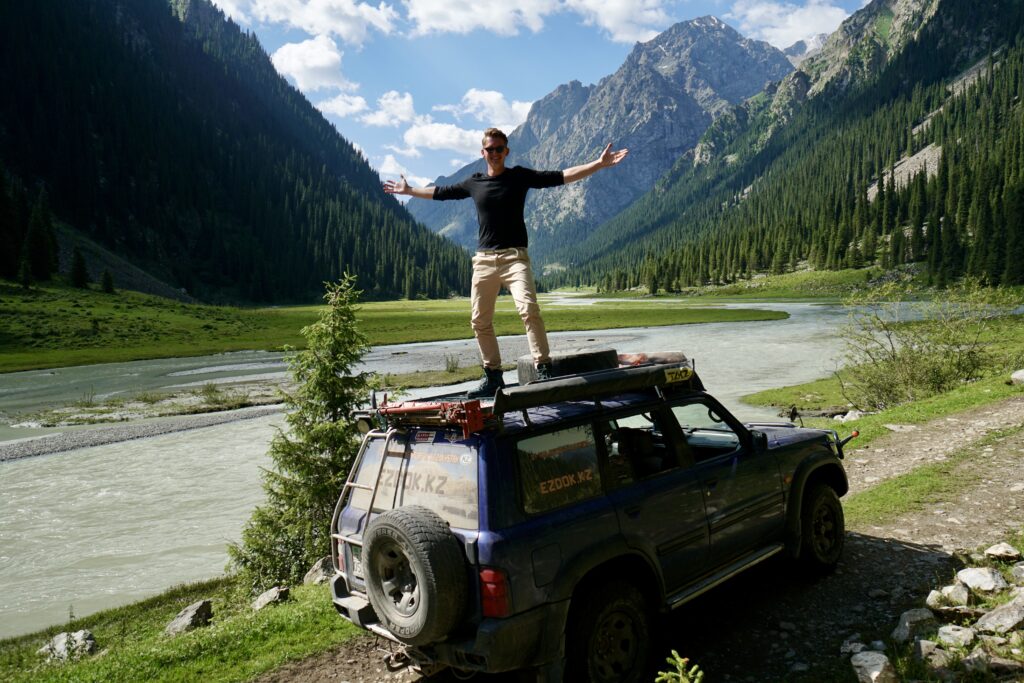
He let us out as far up as anyone could reasonably be let out, pointed at the mountains, and we started walking.
The Long Climb to the Lake
The trail follows a creek the whole way up, clear and loud and ice cold, the kind of water you can drink straight from the mountain. We passed horses grazing loose in the valley with nobody watching them, the way everything in Kyrgyzstan seems to belong to no one and everyone at once. The forest gave way to open slopes, the slopes got steeper, and the air got thinner the way it does, slowly and then all at once.
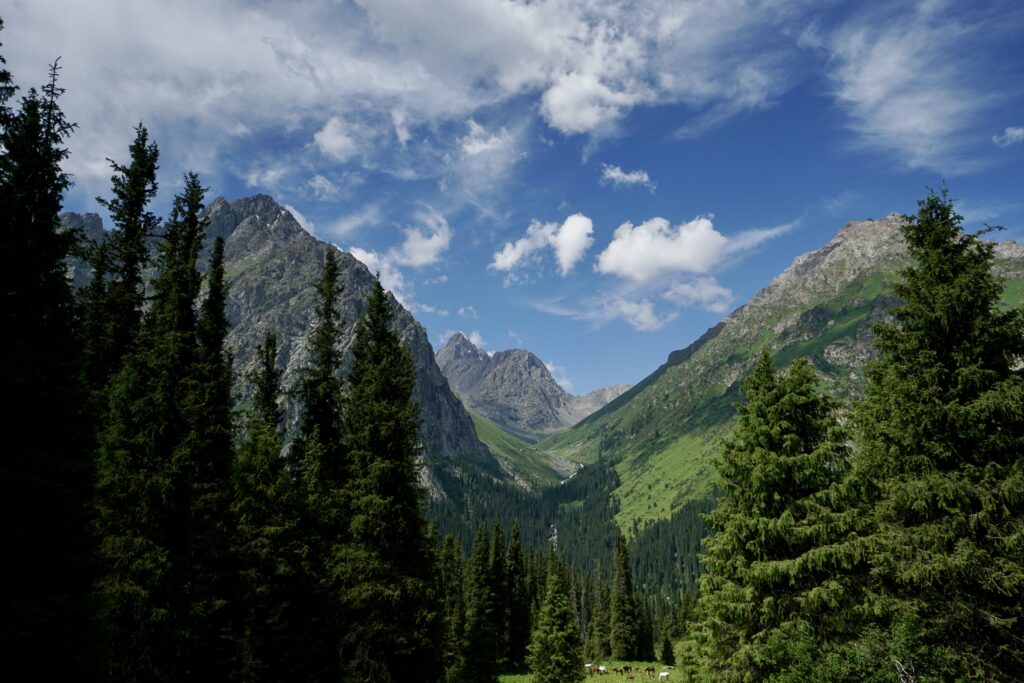
I was 26 during this trek, I felt fit and I blasted on, feeling the sun burn on my beck but focused on my goal to reach that fabled lake. My dad, 65 at the time, blasted on with unnatural strength for someone of that age, some Kyrgyz even complemented him of his stamina. He followed shortly behind, but together we were conquering the challenge ahead with the great speed of two antilopes in the savannah, knowing we had to be back before sunset.
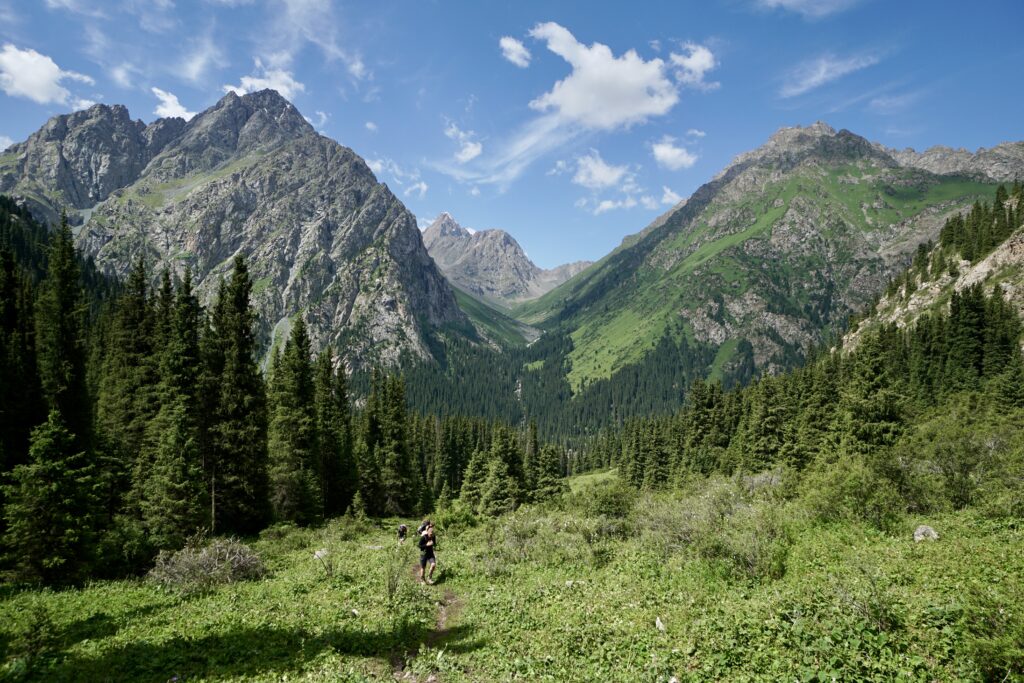
Somewhere around halfway we ran out of food. Then we ran out of water. Forty kilometres was always going to be a lot to ask of a single day, and we had packed like men who expected to be back at a table by afternoon. We rationed nothing because there was nothing left to ration. We just kept climbing. The was a final ascent and then boom!
And Then, Ala Kul
And then the lake.
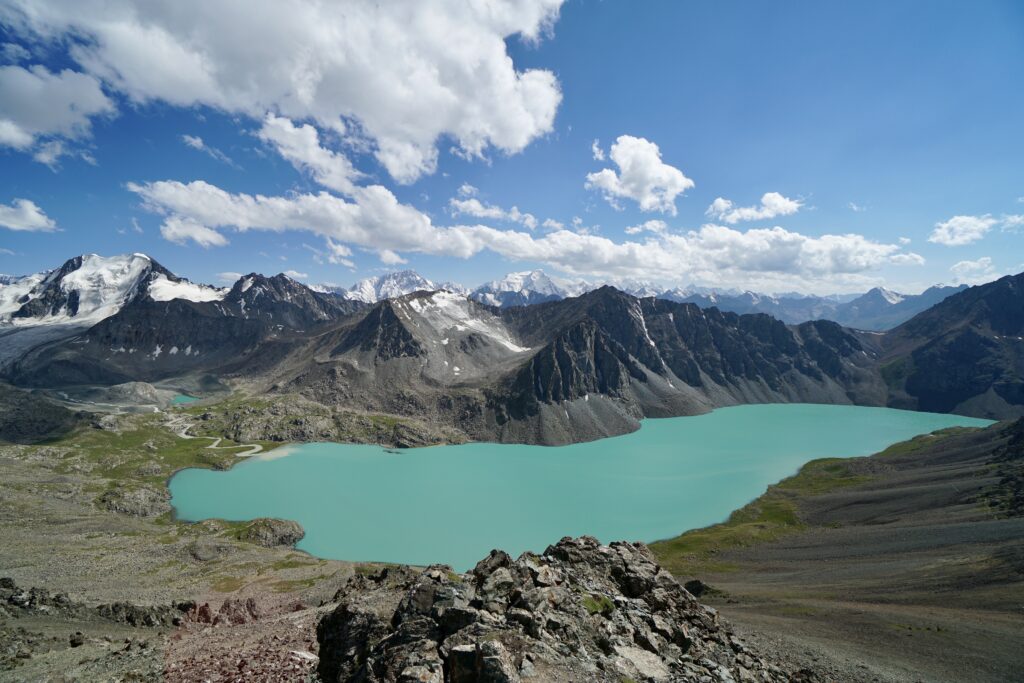
Sometimes when you travel, you’re like, this image has been edited, and actually it isn’t that great in real life. This situation was the contrary, I think for everyone that has been to this lake, you will never forget it. The dark rock, and the milky blue water, unlike I had seen before, also with towering spires behind it. We stared at it, in awe.
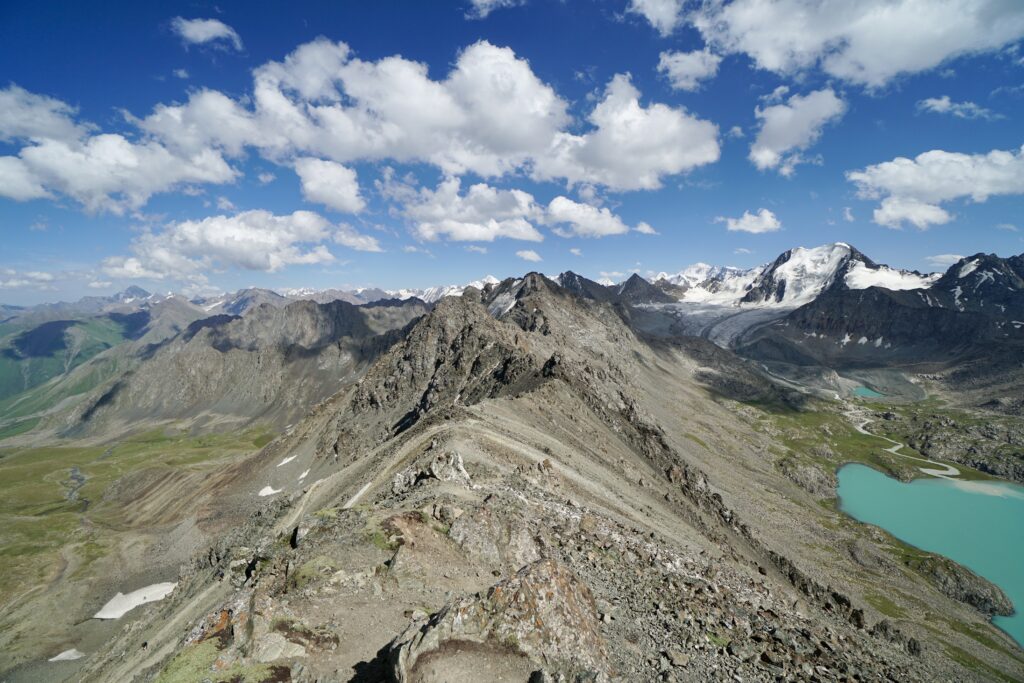
It was everything the stories had promised and it was ours alone, more or less. The few people up there had walked three days to reach it and were setting up camp for the night. We pushed on towards the grand view, because of course also had to see it from the top! I charged on and collapsed at the top, while my dad took it slowly and steadily and was fit at the top, fitter than me to be honest. But we could not have missed this view!
The way down
When my dad and I turned around to walk back down, they looked at us like we had lost our minds. You came all this way, for an afternoon? Some of them actually said it. We just smiled. We had walked nearly two thousand metres up the side of a mountain on an empty stomach, and we were going to walk all of it back down before the light went.
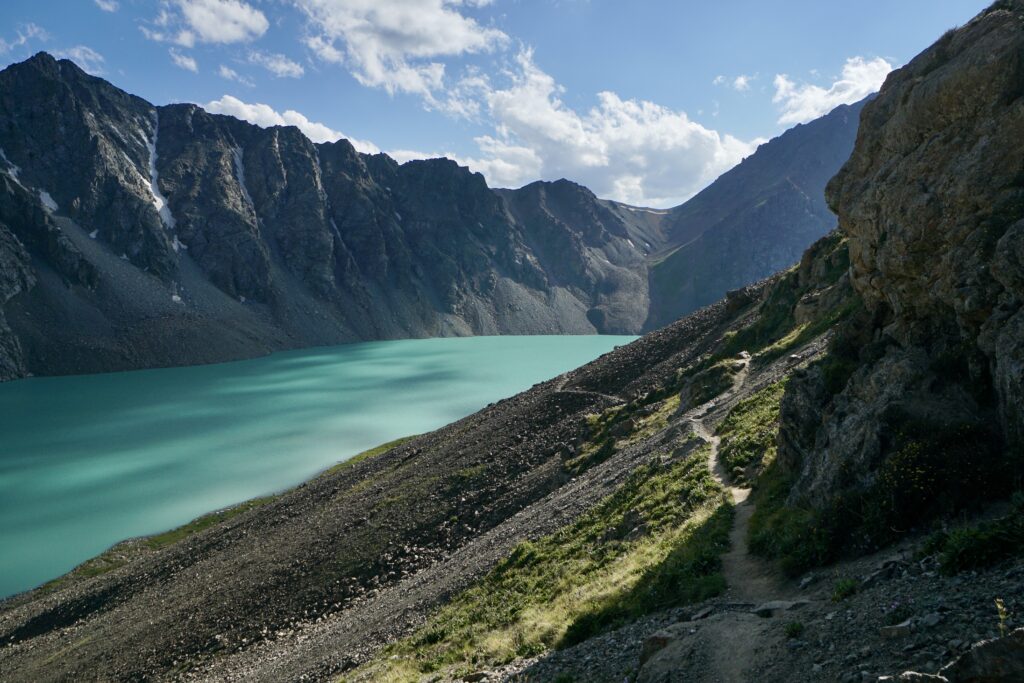
This is the frame I sell as a limited edition print. If you want it on your wall, it is available on BasjeaunExplores on Etsy.
We drank from the creek (didn’t get ill), and we stormed down the mountain hungrily and satisfied! When we were almost at the Nissan Patrol, Sergei was already searching for us, and asked if we were okay. We got back in the car, on to our comfortable hotel. The next day we woke up and couldn’t walk, but we felt happy and satisfied and did a relaxed day in Karakol.
Why This Is Still My Most Magical Hike
People ask why this is still my most magical hike, years and many countries later. It is not only the lake, although the lake earns every word the stories give it. It is that I did the hardest and most beautiful day of walking I have ever done next to my father, the two of us too stubborn to do it the sensible way, carried halfway up a river by a man who used to keep secrets for a vanished empire. You cannot plan a day like that. You can only say yes when it offers itself.
The Ala Kul Lake print from this trek is a limited edition in BasjeaunExplores on Etsy, and you can see more of the range on my main etsy page.
KNOW BEFORE YOU GO: HIKING ALA KUL
In short: base yourself in Karakol, go between early July and mid September, and decide before you start whether you want the full three day traverse over the pass or a long single day to the lake and back like we did.
FAQ
No special trekking or border permit is required. You pay a small Ala Kul Nature Reserve entry fee at the Karakol Valley gate, usually around 250 som per person, in cash.
It is a hard, high altitude hike. The pass climbs to nearly 3,900m, the ascent is steep, and the far side is a loose scree descent. Most people spread it over three days, and only fit, well acclimatised hikers should consider reaching the lake in a single day.
Early July to mid September is the most reliable window, when the high ground is mostly free of snow. The pass can hold snow into early summer and the weather turns fast at any time, so always carry warm and waterproof layers.
A guide is not mandatory and the route is well walked and easy to follow with an offline map. A guide becomes worth it if you want a 4×4 driven up the valley, want help booking yurts, or are not confident at altitude.
The lake sits at 3,500m and the pass higher still, while Karakol is only 1,760m. That is a fast climb. Spend a day or two in Karakol first, drink constantly, walk slowly on the ascent, and treat any headache that worsens as a reason to turn back rather than push on.
There are no card machines on the mountain, so bring enough som in small notes for the gate fee, the camps and food.
On the full traverse, yurt camps along the route and guesthouses in Altyn Arashan give you a bed with dinner and breakfast for roughly ten to twenty US dollars. Book through your Karakol hostel, CBT Karakol or Destination Karakol, and rent any gear you need in town.
It depends, most people walk the classic three or four day traverse, sleeping in a yurt camp or tent near the lake and crossing the 3,900m pass to descend to the Altyn Arashan hot springs. We did a long out and back to the lake in a single day, driven as far up the valley as possible first. It is hard, it is not for everyone, and you miss the pass and the hot springs. But if you would rather sleep in a bed in Karakol than camp at altitude, it can be done. Start early, and carry far more food and water than we did. Moderate to good fitness is required.
Karakol is the base, about 405km and seven hours from Bishkek by shared marshrutka. From Karakol, marshrutka 101 runs to the Karakol Valley park gate, or you can take a taxi. To skip the long valley approach the way we did, hire a 4×4 in Karakol for somewhere around 2,000 som. The road turns to riverbed and the drivers know exactly how far they can push it.
Mountain weather here changes within the hour, even in August. Carry warm layers and waterproofs whatever the morning looks like. The trail crosses the creek more than once and the rock near the top is loose, so trekking poles earn their place.
[…] you have read my Ala Kul story you already know how that chapter […]