
After a day on the road from Baghdad to Samarra and on to Hatra, it was time to drive the last stretch to Mosul, where I would spend the night. From the moment I started planning this trip, people had questioned my sanity whenever I said I was going there. So as the driver passed the ruins of war around Hatra and pointed the car north, the nerves were real. I checked into my hotel and headed straight out for a walk, keen to get a feel for this curiosity of a city.
I called a taxi through the hotel and climbed into the cab. Straight away the driver pressed his hand to his chest and then tapped the top of his head. A small gesture, full of respect. I gave it back to him, and I felt honoured. When I got out, he refused to take my money. I refused to let him leave without it, and in the end he gave in. This was Mosul, the city the world remembers for one of its darkest chapters, and within an hour of arriving a stranger had already shown me more grace than I get on an average day at home.
He had dropped me at a kebab place the hotel recommended. I was starving, so I was excited to savour the famous Mosuli kebab. I ordered while almost the whole restaurant stared at me, and then they brought out a double portion without me even asking. It was great and so generous. I sat there full and a little stunned, then walked it off through the dark streets on the way back. I reached the hotel in the middle of the night. The room was basic, stains on the wall and a smell of old smoke, so I asked for another one and tried to sleep.
Say Mosul out loud and watch faces change
Say Mosul out loud in Europe and watch faces change. This is where ISIS declared its so called caliphate in 2014, from the pulpit of the Great Mosque of al-Nuri. This is where the battle to take the city back flattened the old town in 2017, and where the famous leaning minaret, al-Hadba, the hunchback, was blown up rather than handed over. For years that was the whole story of Mosul. Rubble and grief. But I had a feeling the story had quietly moved on without the news and the travel advisories noticing, and that hunch is what brought me here, to see for myself what all the fuss was about.
After everything, the mosque is still standing
I woke up better than expected, with a feeling of optimism, and went out to meet the city by day. I started at al-Nuri, and the mosque is open again. After eight years it reopened in September 2025, rebuilt brick by brick from its own salvaged stones under a UNESCO project with a name that says everything, Revive the Spirit of Mosul. The leaning minaret stands on the skyline once more, hunched exactly the way it always was.
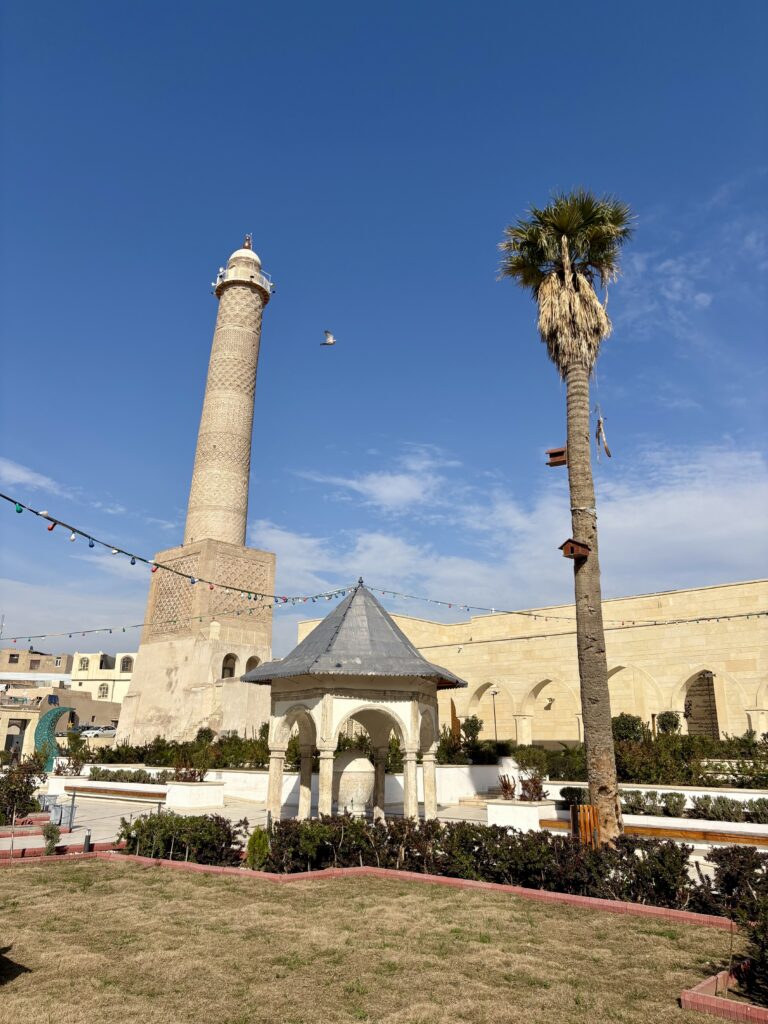
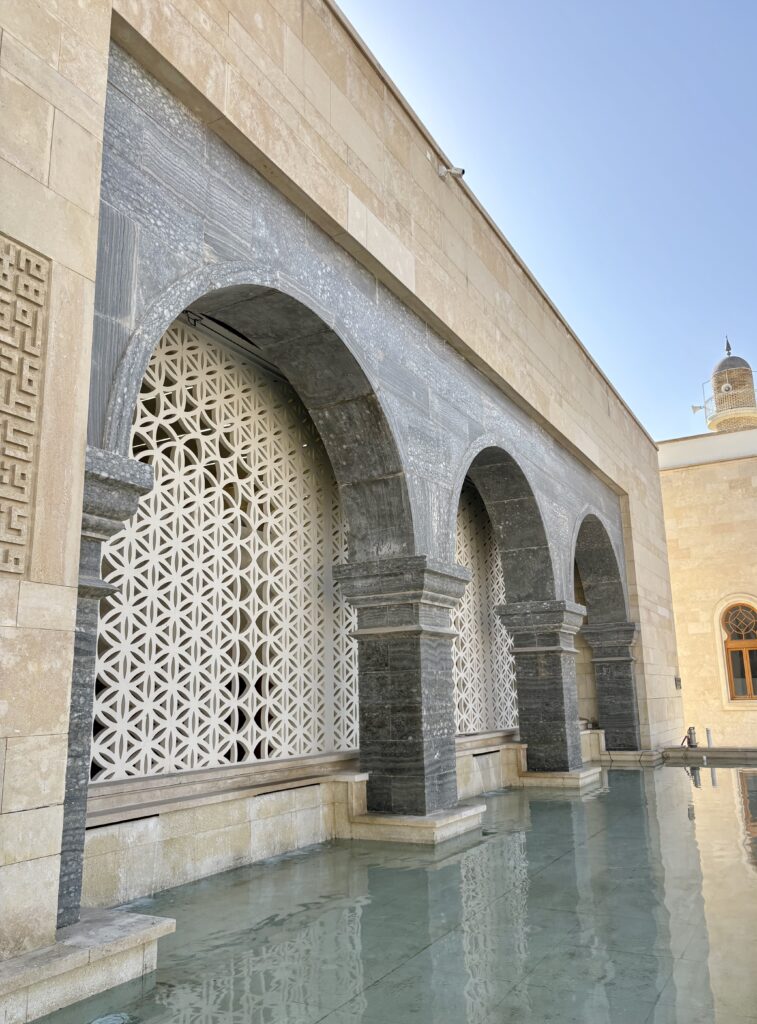
I stepped inside and it was empty. New, clean, holy. The light was soft and the whole space felt powerful in a quiet way, like it was holding its breath. I have photographed a lot of sacred places. Few have felt like this one, where you can still sense both what was lost and what was chosen instead. I was deeply impressed, especially by the Sufi architecture. The water inside al-Nuri is a classic Sufi feature, and it gives the whole place a calm that is hard to put into words.
Waving me into the Palatial house
From the mosque I walked into the old city, and it is still deeply scarred. Whole streets of bullet holes and graffiti, walls nobody has touched since the fighting. You feel the weight of it in your chest. It feels awkward and painful, and it makes you wonder why anyone would come here just to look at destruction. To me that felt like a poor excuse to visit the rising phoenix of Iraq. It is a long street of heartbroken, collapsed buildings. And then, halfway down it, a man waved at me. Come, he said, I want to show you something.
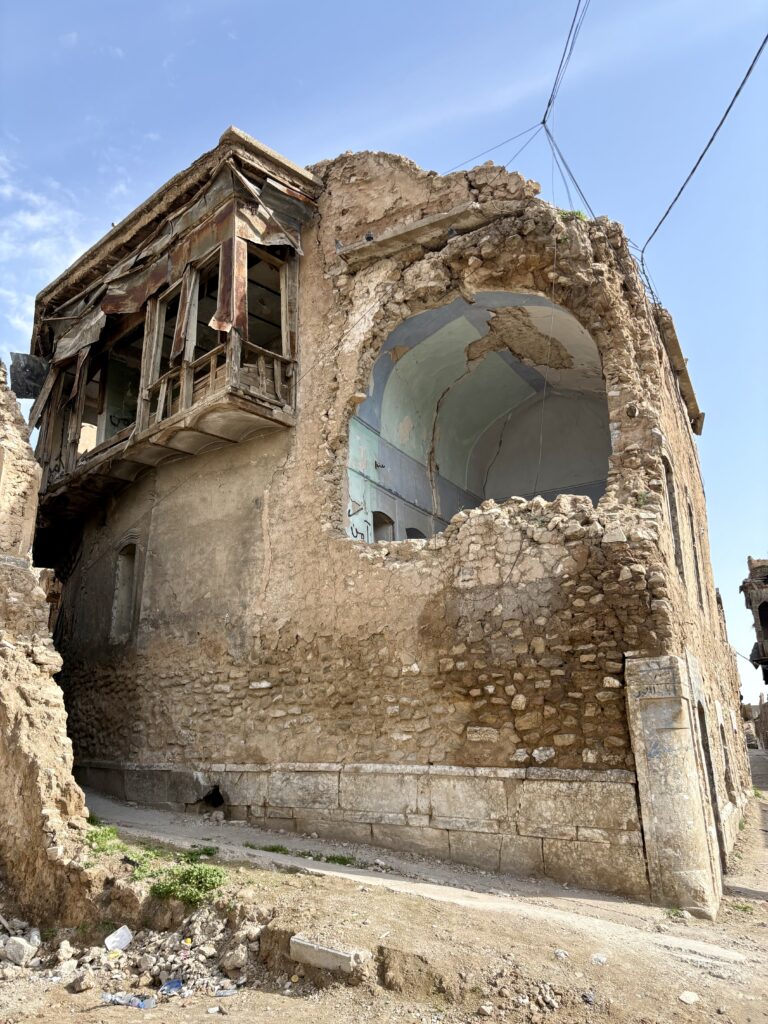
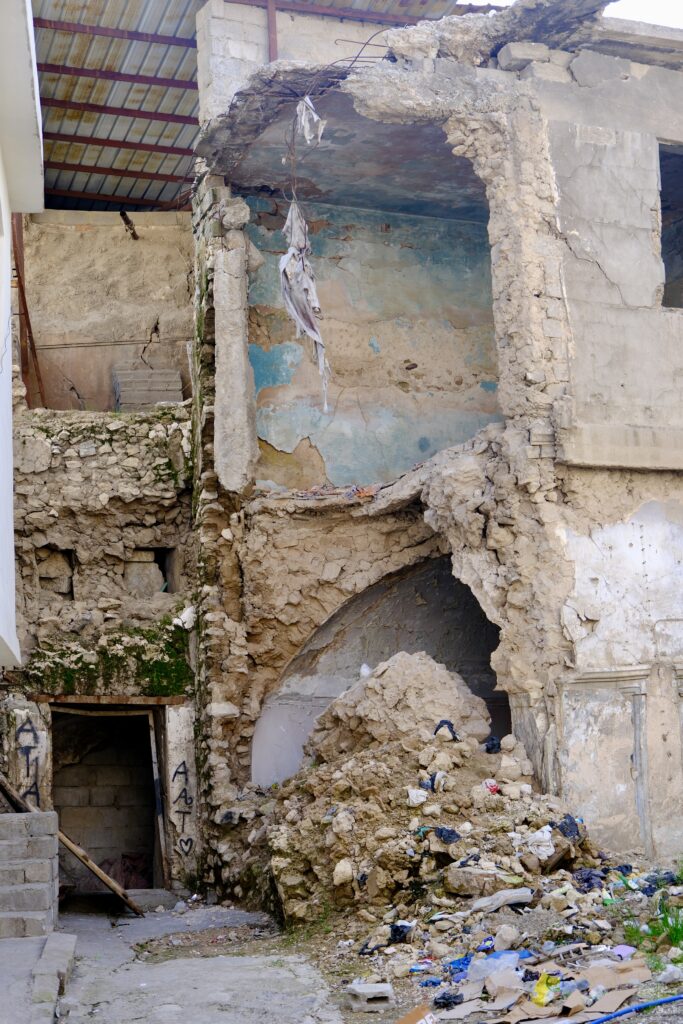
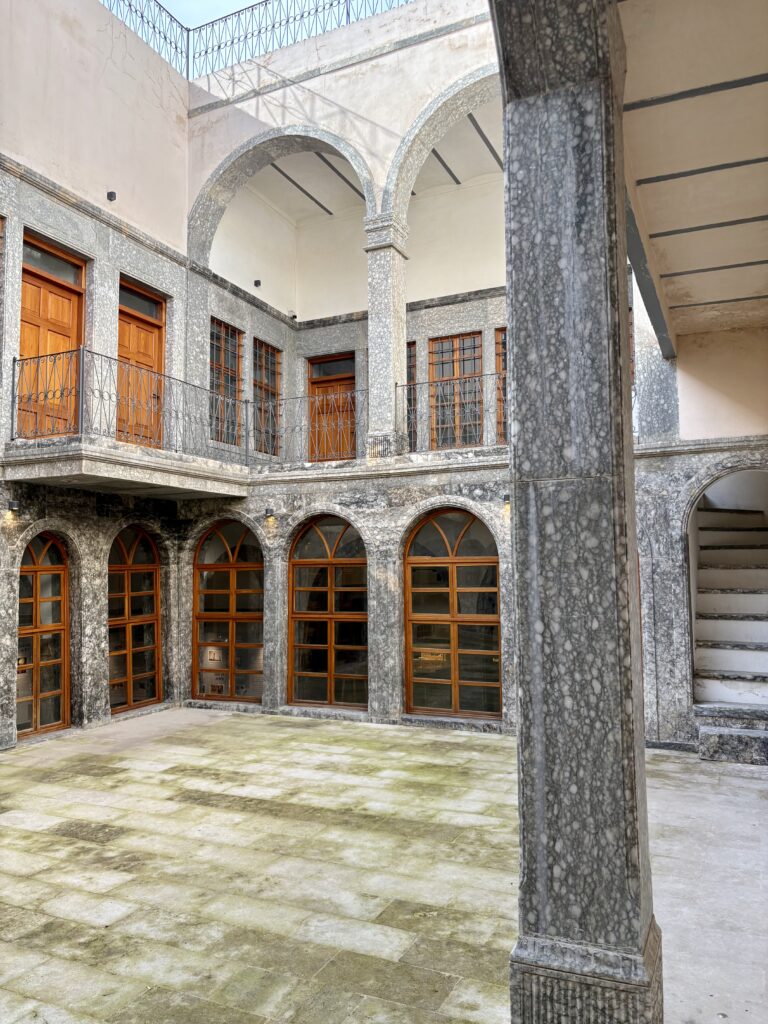
Inside, he showed me a restored heritage house, known as the palatial house. It was beautiful, rebuilt by UNESCO in the pale Mosul marble the city is known for. He walked me through every room, pointing out the historical details and the architecture of what is now a small museum. It seemed that even when I went looking for destruction, Mosul had other plans for me.
They would not let me photography the ruins
I left in awe and stepped back into the ruined streets. A woman waved me off, telling me to leave this part and go that way instead, because it was much more beautiful. I took the hint. It was time to follow the spirit of the phoenix. I walked down the path and came out into a huge construction zone. People had already been kind to me in Mosul, but here it went to another level. Cranes, fresh stone, noise, life. People were out, friendly, calling me over, wanting their picture taken. The same place holds both things at once, the wound and the healing, right next to each other.
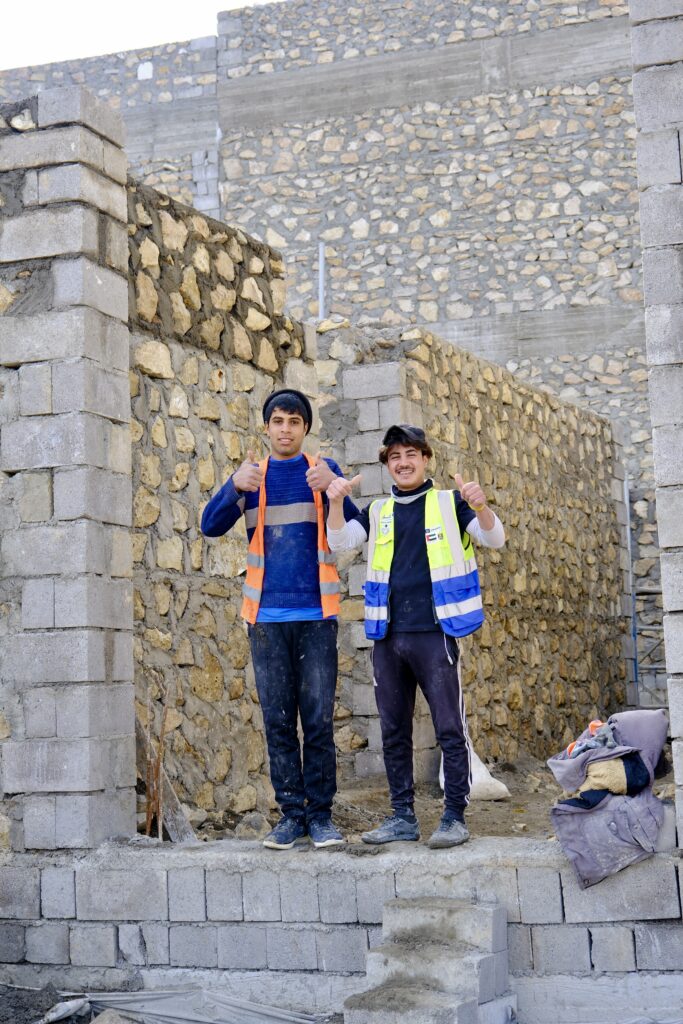
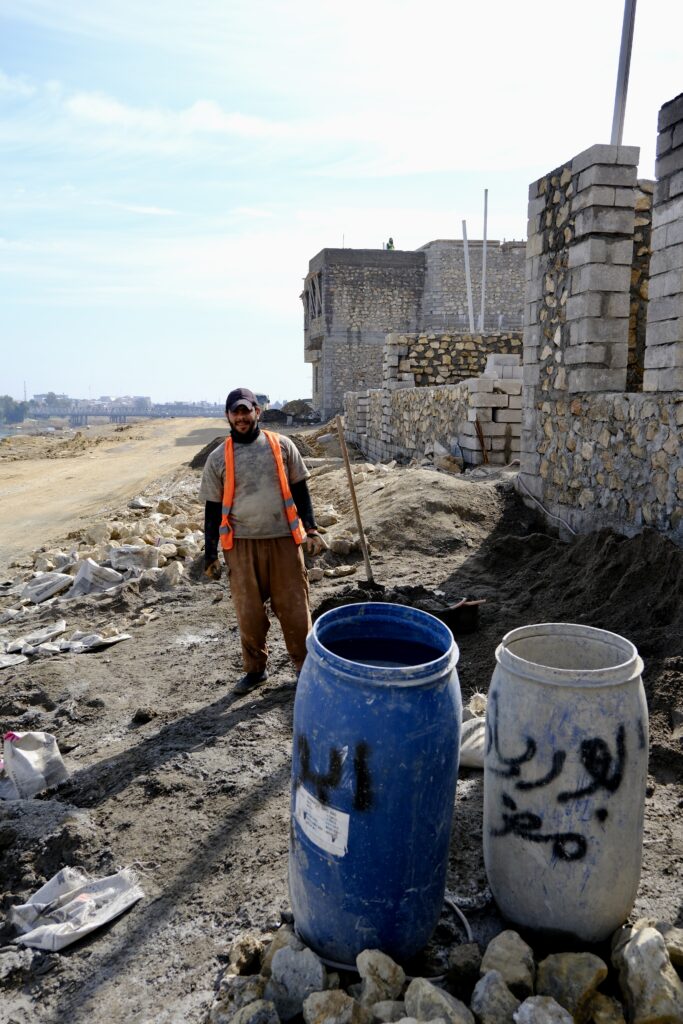
Here is the thing that stayed with me. The people of Mosul did not want me photographing the ruins. Every time I lifted my camera toward the damage, someone gently steered me somewhere else. First towards the new mosque, then the palatial house, then towards the river and always towards something beautiful.
The phoenix
The Mosuli’s did not want their home remembered as a wound. They wanted me to see what they are building, not what was done to them. I have never been corrected so kindly in my life. And they were right. I came to Mosul half expecting to document destruction. The Mosuli taught me to document hope instead.
That kindness got under my skin and stayed there. The taxi driver, the double kebab, the people pulling me toward the good parts of their city. By the time the day was ending I was sad in a way I did not see coming. I only had one day in Mosul, and I wanted ten. It is a strange thing, to leave a place the world pities and feel like you are the one who got something.
So this is what I want you to take from this. The kindness of the people of Mosul is incredible, some of the best I have met anywhere in the world. And the city itself carries a big hopeful power, the feeling of a place deciding, out loud, to live. Mosul is not a ruin you visit. It is a comeback you get to witness.
Go, if you can. Bring respect, bring an empty stomach, and come to admire the phoenix of Iraq.
Visiting Mosul Iraq: Know Before You Go
Mosul rewards travellers who come to listen, not to gawk.
Where to stay. Mosul’s accommodation is still catching up with the city itself, so this is one place where choosing well actually matters. I stayed at Hotel Modern Palace 2 and I will be straight with you, it lived up to neither word in its name. The basics were just about there and no more. Skip it and spend that effort finding something better.
The Ramada looked like a far more comfortable base for coming back to after a long day in the old city, and it is on my list for next time. If you want to go deeper, ask around in travel Facebook groups or through local contacts about a homestay. It is harder to arrange here than in touristed cities, but the Mosuli are so warm and proud of what their city has become that staying with someone local changes the whole trip. Book late and check recent traveller reports, because the scene here is moving fast and what was best six months ago may already be beaten.
What to see. Do not miss the rebuilt al-Nuri mosque, the beautifully restored palatial house in the old city, and the riverside construction zone where you can feel the whole city coming back to life. Let the locals point you onward. They always know where the good light is.
Photography and respect. Read the room. People will happily pose for you and wave you over, but they do not want their city reduced to its damage. Follow their lead, point your lens at the life and the rebuilding, and always ask before photographing someone, especially women.
FAQ
I felt safe the whole time. The checkpoints on the way in, all the way from Hatra, were relaxed, and the city itself was calm and welcoming. Iraq is still a place that changes, so check the current situation before you go, but Mosul today is a long way from its headlines.
Easiest from Baghdad. I went with a Sooker tour that routed through Samarra and Hatra on the way north, which I would do again in a heartbeat.
Yes. It officially reopened in September 2025 after being rebuilt brick by brick, leaning minaret and all.
I had one day and wished for ten. Two days minimum if you actually want to fully see the place.
Samarra and Hatra were both on my road into Mosul, and they deserve their own stories soon. If you want another Iraqi adventure that surprised me just as much, read about my time in Karbala next. That one was an incredible adventure of a completely different kind.
Leuk geschreven Basjan!
Wie weet ga ik er nog eens naartoe